Monthly Archives: May 2009

Boundaries

A Sermon preached at Southminster Presbyterian
May 17, 2009

Acts 10

We live in a world of boundaries. And boundaries can be helpful. Like when they keep the Huns from invading China. Boundaries can mean different things to different people. Israelis argue this wall is to keep people safe. Palestinians argue that this wall keeps them from their jobs, their fields, their families.

And we have our own boundaries in the US.
But some boundaries are more subtle. Boundaries are a part of our identity and help us know who we are in relation to other people. If you see someone wearing this logo, you’ll know that they are not fans of the school represented by this logo, and vice versa.

Some boundaries aren’t immediately apparent. Sometimes you need to understand cultural contexts to spot them—from clothing to the cars we drive to the neighborhoods in which we live—there are all sorts of boundaries that help us figure out who we are and help us figure out how we relate to others.
Some boundaries are natural. Mountains are pretty effective borders. As are rivers and oceans. But some boundaries are just lines in the sand. Literally.

Boundaries are not all bad. They keep us safe. But they are illusory to a degree. We might, for example, feel safer with a big fence running along the length of our border, but the reality is that borders don’t keep everything out. Despite the wall on our Southern border, swine flu made it across.

For Peter and Cornelius, boundaries helped them navigate their world. Each of them came from cultures with clearly defined boundaries and expectations. Peter was a Jewish follower of Jesus, who still kept the traditional Jewish diet and religious practices. Cornelius was a Roman centurion and a God fearer—someone who follows the precepts of Judaism, but has stopped short of circumcision and full conversion.

It appears that the earliest practices of the Jesus followers was to keep the boundaries, the distinctions in place. If you were a Jew who followed Christ, you hung out with other Jews who followed Christ. If you were a gentile, you hung out with other gentile converts.

And really, are we that different today?

We tend to gather with people with whom we can identify.

So, when we think of Peter and Cornelius, don’t think of this as just history. Think of this story as here and now.

As Peter is preaching, the Holy Spirit fell upon all who heard the word. Then, catch the prejudice embedded in the text. “The circumcised believers (translation: jewish Jesus followers) who had come with Peter were astounded that the gift of the Holy Spirit had been poured out even on the Gentiles.”
How often do we do that? Invite people to join us, but then assume that we are still the only ones with the gifts?

Because they had been preaching the Good News to the Gentiles. They believed Jesus when he said to take his gospel to the whole world. But they seemed to operate as if those new converts had to act exactly like them to receive the gifts of the Spirit.

Back at the turn of the 20th century there was a church in Tucson, Arizona that sent money to the many Native American Reservations in Arizona.. The gospel told them to take care of the poor. So they did. They sent money and clothing and food support. But then people started leaving the Reservation and came to the cities, including Tucson. And where did they go? They went to the church that had so faithfully supported them.

But the white congregation in Tucson wasn’t quite ready for integration. Sending money and support to the Reservation was one thing. Having those people show up to worship was something else entirely. So the Tucson congregation started a new congregation so the Native Americans would have their own place to worship. While that story makes me sad on many levels, it is not all bad news. The Holy Spirit was not to be deterred. This new congregation became Southside Presbyterian Church. It is a beacon for social justice in our denomination, a place where all are welcomed, an active leader in the sanctuary movement, and a reminder that God’s ways are not in our control. Nor will they be held back by our boundaries and walls.
We can see the breaking down of Peter’s boundaries in this text. At the beginning, he has a clear understanding of what is clean and unclean. But Peter moves to see that if the Holy Spirit has visited the Gentiles, there is nothing to separate them anymore.

And Cornelius’ assumptions are changed too. There was no reason that a Roman Centurion, no matter how faithful a man, would feel a need to invite Peter into his home. Yet the angel told him to do it, and so he does.

The Spirit challenges our assumptions. She keeps putting us in situations where we are not comfortable. Imagine having someone come to your house who is from a foreign country. You don’t know their food preferences. You don’t know their cultural traditions or expectations. You want to be a good host, but are aware that you will likely get something wrong. There was a young man from Kenya in a small group I was leading at the Presbyterian Youth Triennium in 1998. He became a friend and the next summer, we hosted him for a few weeks when he was back in the States. He stayed with us and with some other members of the congregation. It was both a great experience and an exhausting one. For all of us. Our food preferences were different. Our life experiences were different. For example, he didn’t understand, no matter how much I tried to explain it to him, why I got in my car and drove to a gym to run on a treadmill. I realized that it defied explanation even to me.

But it was one of those great experiences where we could shed light on each other’s cultures in ways that we couldn’t do by ourselves. Lots of people in America drive to the gym to run on a treadmill. It never occurred to me, before he mentioned it, how ridiculous that is.

So Peter and Cornelius, at the urging of the Holy Spirit, come together, tearing down boundaries and trusting God who brought them together. They were each given visions that allowed them to see the world differently. To see their relationship with each other differently. To see their boundaries differently.

But it isn’t easy for them. Peter winds up in all sorts of trouble in the next chapter. Not for baptizing Cornelius and his friends. But for eating dinner with them.

Listening to the voice of the Spirit is not without risks. It will certainly put you in uncomfortable situations. It will cause you to reconsider It might even get you in trouble. But it will also help you break down the boundaries that either you have built for yourself or your society has built for you.

The question for you is this: where is the Holy Spirit calling you to break down your boundaries? Who is out there in the community, or in this congregation, that might be waiting for an invitation from you before they can cross their own borders and live into what God is dreaming for them?

And, the question for us, as a congregation, is how do we listen for the voice of the Holy Spirit and live into the future God is dreaming for us? Because if we listen to the voice of the Spirit, we need to be ready to be disrupted. We need to be ready to not control the outcome. We need to be ready for things to change and to be different.

And when boundaries seem to hard to overcome, when the walls that divide seem to be too great for us to break down, take heart that God’s Spirit will not be limited by them as we are. God’s Spirit will help us overcome. Some things, like the Holy Spirit, flaunt borders. Lizards can scale a wall without a thought. Butterflies float right over the top, riding on the wind currents. These walls that seem so insurmountable to us are not insurmountable to the Holy Spirit.

One way for us to listen for the voice of the Spirit as a community is to immerse ourselves in Scripture, trusting that the voice of our tradition will speak to us in new ways. On the 1st of June, we will be starting a congregation wide program of reading through the whole Bible in one year. We will be passing out Bibles in worship to kids who are 3rd grade and up and we hope that people of all ages will join in the readings, with parents reading the texts to younger kids.

I hope you will join us after worship on May 31, in 2 weeks, for the kick off celebration. The Parish Life Committee is planning a Pentecost brunch for that morning and we’ll be passing out the participant’s booklets with all of the readings. We will also have some Bibles for sale for adults who need them.

Throughout the year, we’ll have opportunities to get together and discuss the readings. If you would like to help plan the events throughout the year, please talk with me.

In the final verses of our text this morning, the narrator makes an interesting comment. “Then they invited Peter to stay for several more days”. The Spirit brings people together for relationship. I am thankful that the voice of the Spirit brought us together. And I am excited to discern the voice of the Spirit with you in the coming years.
Amen.


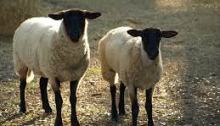
The Role of the Sheep will be played by….

John 10, 1 John 3:16-24

A Sermon preached at Southminster
May 3, 2009

In John’s gospel, Jesus is known for making pronouncements. In the other gospels, he spends a lot of time teaching, or speaking in parables. But here, he just announces things that are seemingly disconnected from the action going on around him. They aren’t disconnected, of course. This is a very complex piece of literature. But at first glance, it seems disconnected.

“I am the Good Shepherd.”

This is one of Jesus’ “I AM” statements in John’s gospel. I am the way, the truth, and the life. I am the vine, you are the branches. I am the resurrection and the life. I am the bread of life. I am the light of the world.
Many of the “I AM” claims are ambitious, to say the least, and caused their own set of problems for Jesus. Resurrection and the Life? He will have death threats in full force after he makes that claim and brings Lazarus back from death.

But the Good Shepherd claim would have seemed out of place in the list for a first century audience. Even though King David had started as a shepherd, and even though shepherds were invited to the manger in Bethlehem, shepherds were not people of high esteem. To claim that you are a shepherd is to align yourself with people who are on the outside. People who society has decided it can do without—“hey you! Why don’t you take my sheep and go live with them in the hills for months on end. I’m too important to do this task, but nobody will miss you.”
Perhaps today, Jesus would say, “I AM the good migrant farm worker”. Or “I AM the good homeless man.”
By claiming “shepherd” status, Jesus makes a radical claim.

First, he warns people that his kingship is best understood when you realize that worldly power and prestige are not his model. He explicitly claims a position of servitude, humility, and exclusion.
Second, he connects himself to the tradition of David. Yes, he is a king from the line of David. But he harkens back to David as shepherd boy. Not David on a throne.
Third, he evokes Hebrew Scriptures to add another layer to their understanding. In Ezekiel 34, God says, “I, myself, will be the shepherd of my sheep.” (Ezek. 34:15)
And in Ezekiel, the reason God becomes the shepherd for God’s own sheep is because the leaders of the people, the shepherds, had been doing a terrible job. The sheep were scattered, they didn’t have food to eat, and they were under attack.
So, for Jesus to become the shepherd of his own people is to criticize the job the current leaders were doing. They become the thieves and bandits in this passage in John’s gospel.
“The thief comes only to steal and kill and destroy. I came that they may have life, and have it abundantly.”
Jesus evokes his Davidic kingship as he evokes Ezekiel to condemn the religious leaders. The message would have been clear. And would NOT have been well received by the leaders of the day. In a few more verses, the authorities will try to stone him.

The language of Jesus as Shepherd also evokes a Psalm. Perhaps the most comforting and familiar passage in all of the scriptures. The 23rd Psalm, which we sang earlier this morning.
The Lord is my shepherd; I shall not want.
He maketh me to lie down in green pastures: he leadeth me beside the still waters.
He restoreth my soul: he leadeth me in the paths of righteousness for his names sake.
Yea, though I walk through the valley of the shadow of death, I will fear no evil: for thou art with me; thy rod and thy staff they comfort me.
Thou preparest a table before me in the presence of mine enemies: thou anointest my head with oil; my cup runneth over.
Surely goodness and mercy shall follow me all the days of my life: and I will dwell in the house of the Lord forever.

Jesus uses these familiar pictures we have of God to give us a new way to understand his death and resurrection. By laying down his life for his sheep, Jesus makes clear that his crucifixion is not an accident or a tragedy. It is what Jesus chooses to do for his flock. He is not a victim. In John’s gospel, he marches to the cross with determination. And his actions are not to be controlled by his followers.

“I have other sheep that do not belong to this fold. I must bring them also, and they will listen to my voice. So there will be one flock, one shepherd.”

Whenever we try to claim our shepherd exclusively, we should remember these words. Claiming ‘one shepherd’ is not as hard to do, but to claim ‘one flock’ is hard. I don’t want to be in a flock with everyone who claims Jesus as shepherd. That is my confession to you. God may be preparing a table for me in the presence of my enemies, but that doesn’t mean I want to sit next to them at the table. Yet Jesus claims there is to be one flock, and one shepherd.
So we continue to pray for reconciliation. We continue to pray for redemption and for restored relationships.

And, if Jesus is the Shepherd, then the role of the sheep today’s lesson is being played by….us.
It is uncomfortable to see ourselves as sheep. They aren’t known for being the brightest animals in the barnyard. And we like to further the illusion that we are in control of our own hillside wanderings. But the reality is that sheep need to be led. I have spent no time as a shepherd, but I hear that if a sheep walks into a dead end, it will just stop. It won’t turn around. It will just wait for someone to come lead it back to a better path. How often are we like that? We keep running into walls and don’t stop to turn around. Walls of abuse. Walls of self destruction. Walls of arrogance and greed.

And, even though the imagery of the shepherd language is so rich, even though we can see fluffy white sheep gamboling about on the verdant hillsides, we should try not to keep these passages only in the realm of metaphor.

Because while we are like sheep sometimes, our instructions from these passages should not only be seen as metaphor. Elsewhere in this gospel, Jesus says “Feed my sheep”. And that can make one think of providing spiritual nourishment—teaching, leading, etc. And it is that. But spiritual nourishment isn’t going to help someone who literally needs feeding. Sometimes “feed my sheep” means bringing food for the food pantry here. It means giving a homeless person a sandwich.

Our passage from 1 John is a reminder to “keep it real”.
“Little children, let us love, not in word or speech, but in truth and action.”
The image of Jesus laying down his life is carried over from the Gospel to this letter. “We know love by this, that Jesus laid down his life for us—and we ought to lay down our lives for one another.”
But how did Jesus lay down his life for us?
By dying a gruesome death on a cross.
So, if we should fight our tendency to turn the sheep images into metaphors, we should really fight our tendency to say that laying down our lives for each other only involves our being nice to each other or something like that.

Laying down our lives for each other is how we know love. And there is nothing in these texts that suggests it is easy or casual. And, quite frankly, if you combine this commandment with Jesus’ reminder in the Shepherd passage that there are other sheep in his fold, the implications are tough. For me at least.
Because it is pretty easy for me to love the sheep in this fold. You are fun to be with. We get along. We are simpatico.

But it is often much easier to be angry than to sacrificially love the people who are in Jesus’ other flocks. And the people who are the “other” sheep are likely different for you than they are for me. But this week, please consider who the “other” sheep are for you.

But as I’ve struggled with this First John text this week, what has become horribly clear to me is that “in a time of schism and dissent, what is most threatening is that Christians should continue pontificating about love while they turn hatefully from one another and ignore each other’s needs.”(David Bartlett in Feasting on the Word, Year B, Vol. 2, page 445).

Because that is the other truth in this First John lesson. “Little children, let us love, not in word or speech, but in truth and action.” While words can hurt and harm people, and while we should be careful about what we say, the truth is that we will be known by our actions. That is how we will be remembered.

In a few minutes we will come together at the Table. It is not our table. It is the table of the one shepherd and it is for all of his flock. The very act of communion is a way of living in “truth and action”.
It may seem symbolic, and in some ways it is, but it is a good beginning. Because the truth is that humanity has a bad record when it comes to loving each other in truth and action. We’ve created entire denominations, TV networks, and political parties designed to divide and separate. But Christ keeps calling us together. We can’t look to our own instincts, but are called to look to Christ.
“We know love by this, that he laid down his life for us….”

As we prepare to come to the table, let us consider our truths and actions. Let us ask Christ to guide our hearts to make room at the table for all of Christ’s flock.
St. Francis of Assisi once said, “Preach the gospel at all times. If necessary, use words.”

Let us love in a way that our truth and our actions, not our words, will bring the gospel into our community and in our world.


Follow

Get every new post delivered to your Inbox.

Join 611 other followers